Announcing our SOC2 Type 2 Compliance.
Categories
Blog INSIGHTS

Rethinking Financial Education in a Digital World

Financial literacy is evolving. It’s no longer confined to in-person seminars, dense brochures, or scheduled advisor meetings. Today, consumers (especially Gen Z and Millennials) are learning in short bursts, through interactive content, on their own time. They turn to TikTok explainers for quick breakdowns, YouTube walkthroughs for how-to knowledge, and Reddit threads for shared experiences. They’re not waiting to be taught; they’re already learning.

This shift has transformed the role of financial tools. It’s not enough to simply offer functionality. To truly serve today’s consumers, platforms must teach while they guide, helping users understand what they’re doing and why it matters.

Estate planning is no exception.

Many individuals know it’s important, but don’t understand where to start. Or worse, they avoid it entirely because the process seems overwhelming. That’s why OneDigitalTrust was built not just as an estate planning platform, but as an educational experience that meets people where they are: online, curious, and ready to learn. 

How OneDigitalTrust Builds Financial Literacy Into Every Step

At OneDigitalTrust, we believe education should be woven directly into the planning experience. Users don’t need to pause or search elsewhere—they get the information they need in the moment, with in-context explanations and interactive support that reinforce understanding as they go.

Here’s how we make it happen:

1. On-Page Help Throughout the Planning Journey

Estate planning includes terms and decisions most people aren’t familiar with—like naming executors, understanding how to divide an estate, or knowing what a revocable trust really means.

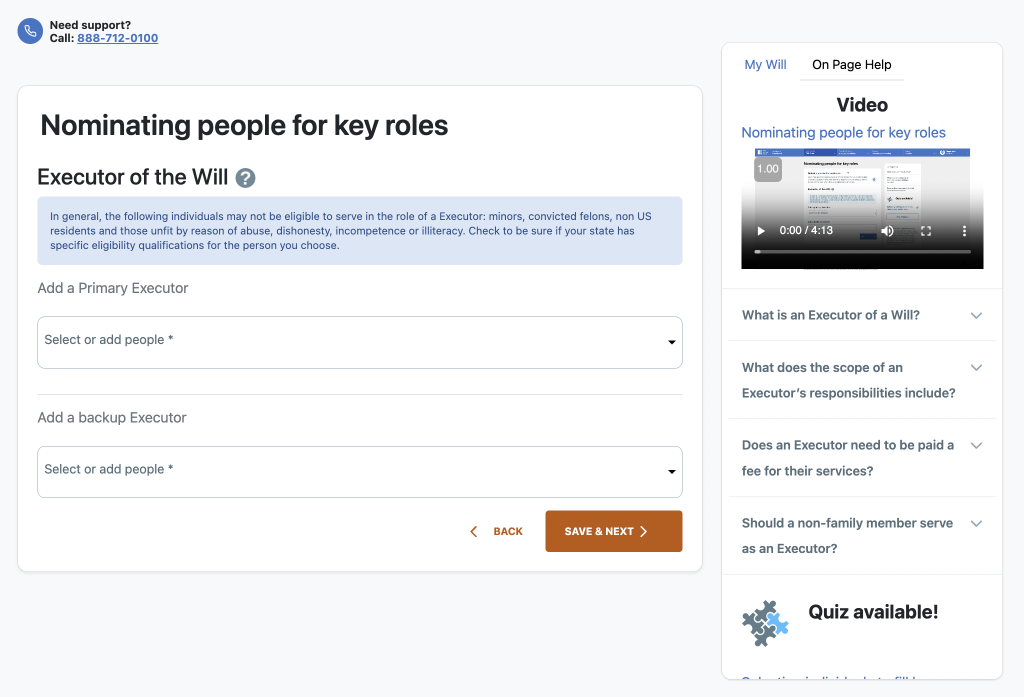
Instead of sending users to a separate help center, OneDigitalTrust provides On-Page Help that’s integrated into the flow of the platform. When a user encounters a question—like how to handle unequal asset distribution or who should be appointed as power of attorney—clear explanations can be navigated to on the right side of the page.

This guidance is written in plain language, and includes expandable dropdowns to go deeper when users want more context.
2. Embedded Educational Videos to Support Decision-Making

In addition to written guidance, OneDigitalTrust includes short video tutorials placed directly within the estate plan creation process. These videos walk users through key topics—like nominating people for key roles—so they can understand both the task at hand and the bigger-picture implications.

It’s not just about getting the document done—it’s about making informed, confident decisions along the way.

3. Estate IQ Quizzes: Turning Knowledge Into Confidence

OneDigitalTrust also offers interactive Estate IQ quizzes to help reinforce key concepts. These short, scenario-based quizzes cover foundational topics like:

  • Key concepts on the distribution of assets
  • Understanding Probate
  • Key differences between a Last Will and a Living Trust

Each quiz is designed to take between 5-15 minutes and helps highlight areas where users can test their knowledge, as well as where they may want to learn more. Results contribute to a personalized Estate IQ score, giving users a sense of progress and confidence over time.

For Financial Institutions and Advisors, Education = Engagement

For credit unions, banks, and financial advisors, education isn’t just a value-add—it’s a trust builder. Consumers are more likely to engage with tools they understand, and more likely to stick with institutions that empower them to learn and grow.

By offering OneDigitalTrust as part of your client experience, you’re not just helping someone create a will. You’re helping them understand why it matters. That turns a transactional interaction into a meaningful, lasting relationship.

And because the platform includes built-in education, advisors don’t have to answer every question directly. The platform does the heavy lifting so conversations can go deeper, faster, and more confidently.

Learning as a Feature, Not a Barrier

Financial education doesn’t have to slow people down. When it’s embedded naturally—through on-page help, short videos, quick quizzes—it empowers people to take action with clarity.

Estate planning is one of the most important things a person can do for their future and their family. With OneDigitalTrust—branded or co-branded by their trusted financial institution or advisor—they don’t just get it done. They understand what they’re doing, and they’ll remember who helped them do it right.


Categories
Blog INSIGHTS

What Happens If You Die Without a Will—And How OneDigitalTrust Helps You Avoid It

Estate planning isn’t just for the ultra-wealthy—it’s for anyone who wants to ensure their wishes are known, and their family isn’t left guessing. But what happens when someone passes away without a will?

Dying without a will (known legally as “dying intestate”) means state law decides who inherits your assets. That often leads to confusion, delays, and outcomes that may be far from what you wanted.

When the Law Doesn’t See the Full Picture

Modern families are diverse. Many people live with long-term partners, raise children from previous relationships, or have close ties with friends and chosen family. But most inheritance laws still prioritize marriage and blood relation, often leaving important relationships unrecognized. Those closest to someone may end up with nothing.

People with fewer resources—especially in underserved communities—are also less likely to have wills. Barriers include cost, limited access to attorneys, procrastination, or thinking they don’t own enough to make it worthwhile. Yet even modest estates, like a car or savings account, can be difficult to manage without a plan.

Here are a few real-world scenarios that highlight just how complicated things can get when there’s no will in place:

The Unmarried Partner Left Behind

Lena and Greg had been together for over a decade. They shared a home, a dog, and joint finances—but weren’t legally married. When Greg passed unexpectedly, Lena assumed she’d be able to manage things. But because Greg didn’t leave a will, state law didn’t recognize their relationship. Greg’s estranged parents became the legal heirs, and Lena had no legal claim to their shared home.

This situation is becoming more common as more Americans cohabitate without marrying. Yet inheritance law hasn’t evolved to reflect that shift. 

With OneDigitalTrust, users can include non-family members in their estate plan. Friends, partners, and advisors can be added, edited, or removed at any time. You can nominate them as beneficiaries for specific assets or assign them to key roles like Executor, Guardian, or Power of Attorney—ensuring your plan reflects your real-life relationships, not just legal defaults.

The “Too Soon” Assumption

Jason, 35, was healthy, single, and working hard to build a more stable future. Like many people in his position, he figured estate planning could wait—something for when he had more time, more money, or more to leave behind. Like many people, he didn’t enjoy thinking about death—it felt morbid, premature, and easy to avoid. But after a sudden accident, his family faced legal hurdles just to access his accounts or make medical decisions. 

People with fewer resources often delay planning, believing they don’t need it or can’t afford it. Whether choosing a basic or custom will, OneDigitalTrust makes getting started easy, guided, and affordable. Users can create a legally valid plan in minutes—no lawyer needed—ensuring their real wishes are protected before it is too late.

The Guardianship Gap

Ana was a single mother raising two minor children. She always meant to put a plan in place—but between work, childcare, and life’s daily demands, it stayed on the back burner. When a car accident took her life, her extended family was left with no clear direction. Disagreements quickly arose: one relative lived nearby and offered stability, another insisted Ana had “mentioned” different wishes years ago. 

Without written instructions, guardianship decisions often land in court, even when family members have good intentions. That can lead to stress, conflict, and outcomes that don’t reflect what the parent would have wanted.

With OneDigitalTrust, users can formally designate a legal guardian for their minor children in minutes—right within the will creation flow. They can also add a backup guardian, update their choices at any time, and read on-page help with additional information such as appointing a guardian who lives out of state.

The Common Thread: No One Planned to Leave a Mess

Even the most loving, organized people rarely expect their lives to end without warning. But without a will, the law steps in—and too often, it doesn’t reflect how people actually live, love, and build families today. 

That’s why creating an estate plan is one of the most important steps you can take. OneDigitalTrust helps bridge that gap with tools that make estate planning accessible, customizable, and aligned with real life. Because protecting what matters shouldn’t depend on assumptions.

Categories
Blog INSIGHTS

Seamless Integration with Financial Accounts: How OneDigitalTrust Enhances Estate Planning for Your Members, Customers and Clients

Estate planning is crucial to securing a member’s legacy, but it often feels like a daunting task. Each asset—whether real estate, investments, or retirement savings—needs to be carefully considered to ensure the individual’s wishes are met. For community banks seeking a more efficient, comprehensive solution to this challenge, the OneDigitalTrust platform offers a powerful tool that integrates directly with financial accounts, simplifying the estate planning process and helping ensure all financial assets are included.

The Challenge: Managing Multiple Financial Assets

As individuals accumulate assets, estate planning can quickly become complex. Real estate, bank accounts, brokerage investments, retirement funds, and other financial holdings all need to be part of a comprehensive estate plan. The traditional approach often requires manually tracking down account information and entering it into the estate plan, which can be overwhelming—and without a proper system in place, important assets may be left out, causing confusion for loved ones and delays in the probate process. This is where the OneDigitalTrust platform provides a valuable solution.

A Unified Platform for All Financial Accounts

The OneDigitalTrust platform allows members to link their bank, brokerage, and retirement accounts directly to the platform. This makes it easier for members to reflect all of their financial assets in their estate plan, consolidating them into one secure, accessible location—and reducing the risk of overlooking key components of their financial life.

How the Integration Works

The integration allows members to:

  • Easily Link Financial Accounts: Eliminates the need for manual entry of account details and reduces the chance of missing key assets in the estate plan.
  • Streamline Asset Management: With everything connected in one place, members can easily view and manage their estate plan to ensure it reflects their full financial picture.
  • Consolidate Financial Data: All linked assets live in one digital space, simplifying estate plan updates and helping members stay organized.

The Benefits for Community Banks

Offering this type of digital experience brings real value to community banks:

  • Increased Member Engagement: A streamlined, user-friendly estate planning experience keeps members engaged and more likely to return for other financial needs.
  • Strengthened Relationships: Estate planning is deeply personal—helping members protect their legacy shows your commitment to their long-term financial well-being.
  • New Revenue Opportunities: As members gain confidence in their plans, they may explore other financial services, from retirement planning to wealth management.

Comprehensive, Hassle-Free Estate Planning

OneDigitalTrust’s integration with financial accounts simplifies estate planning by consolidating a member’s assets into one easy-to-manage platform. It ensures nothing is left out and gives members confidence their plan is truly complete. By offering this capability, community banks can position themselves as forward-thinking partners, delivering meaningful tools that help protect what matters most—now and for generations to come.

Categories
Blog INSIGHTS

Anticipating the Future: How Financial Institutions Can Stay Ahead in Estate Planning

The financial services landscape is evolving at an unprecedented pace, and institutions that wait for change to happen before adapting risk falling behind. As pointed out in the article “Meeting the future before it arrives,” the key to long-term success is anticipating the future—rather than reacting to it.

For credit unions, banks, and financial advisory firms, estate planning represents one of those critical areas where proactive innovation can set institutions apart. While many financial institutions focus on wealth accumulation, far fewer take an active role in helping clients protect and transfer that wealth efficiently. That’s where digital estate planning solutions come in.

Anticipating the Future of Estate Planning

Historically, estate planning has been an attorney-driven, paper-heavy process—often delayed or overlooked by clients. But today, technology is redefining expectations. Digital-first solutions are making estate planning more accessible, affordable, and integrated into the broader financial services ecosystem.

Forward-thinking financial institutions are recognizing that:

  • Clients expect seamless, digital experiences in financial planning.
  •  Estate planning is a key differentiator in holistic wealth management.
  •  Proactive engagement deepens relationships and strengthens client loyalty.
Why Estate Planning Can’t Wait

Waiting until clients request estate planning solutions is like waiting until retirement to start saving—it’s too late to maximize the benefits. Financial institutions must proactively provide tools and guidance, ensuring clients don’t put off estate planning until a crisis forces them to act.

How Financial Institutions Can Stay Ahead

Integrate Estate Planning into Digital Banking & Wealth Management
Clients should have easy access to estate planning tools within their digital banking platforms—just as they do with budgeting, investing, and insurance. Institutions that provide an embedded estate planning experience will build trust and engagement.

Leverage Technology to Simplify the Process
Modern estate planning platforms, like the OneDigitalTrust platform, offer an intuitive, step-by-step process that allows clients to create wills, trusts, and beneficiary designations online. These solutions ensure clients can plan proactively without the friction of traditional legal processes.

Use Estate Planning as a Relationship-Building Tool
By offering estate planning solutions, financial institutions can:

  • Position themselves as trusted, long-term partners in financial wellness.
  • Strengthen engagement with millennial and Gen X clients, who increasingly seek digital solutions.
  • Deepen relationships with multi-generational clients by helping families prepare for wealth transfer.

Future-Proofing Your Institution Starts Now

Credit unions and banks that embrace estate planning technology today will be the ones leading the industry tomorrow. Rather than reacting to disruption, they’ll be shaping the future of financial services—ensuring they remain relevant, competitive, and indispensable to their clients.

Are You Ready to Meet the Future Before It Arrives?

Let’s talk about how your institution can integrate digital estate planning into your client experience and stay ahead of the curve. Reach out to learn more.


Categories
Blog INSIGHTS

A Gift of Security: Strengthen Relationships by Offering Estate Planning to Customers, Members and Employees This Holiday Season

As we approach the holiday season, many of us find ourselves reflecting on the year gone by and thinking about the future. For financial institutions and advisors, this is a time to help customers, members and employees reflect not only on their financial goals but also on the importance of securing their legacy for generations to come.

Why Estate Planning Matters During the Holidays

The holidays are a time for family, togetherness, and planning for the future. It’s the perfect season to talk to clients about the importance of comprehensive estate planning. For many clients, estate planning is something that can be easily overlooked. However, the uncertainty that can come with life changes and unexpected events makes it all the more important to have a solid plan in place.

Financial institutions and trusted advisors can play a crucial role in helping stakeholders protect their hard-earned assets, ensuring their wishes are carried out and minimizing the stress on their loved ones. Estate planning should be an ongoing conversation, and there’s no better time than now to initiate that discussion.

How Estate Planning Benefits Financial Institutions and Advisors

  • Strengthen Client Relationships: By helping clients create their estate plan, you reinforce your value as a trusted advisor. Offering estate planning tools and resources strengthens the relationship, showing clients that you are committed to their long-term success and wellbeing.
  •  Increase Engagement: Offering tools that simplify the estate planning process, such as the OneDigitalTrust platform, enables you to keep clients engaged in managing their financial future. Features such as digital document management and seamless communication with family members are tools clients value when planning for the unexpected.
  • Offer Comprehensive Solutions: Estate planning isn’t just about writing a will—it’s about providing comprehensive solutions that address every aspect of a client’s financial life. Whether it’s creating a will, setting up trusts, or managing healthcare directives, estate planning is a multifaceted service that can help clients navigate complex issues. Financial advisors and institutions offering integrated estate planning solutions can position themselves as holistic, full-service providers.
  • Drive Revenue Growth: A streamlined, easy-to-use estate planning solution can attract more clients, driving growth for your business. By offering a digital solution, you reduce the friction associated with traditional estate planning and provide a value-added service to both current and potential clients.

How OneDigitalTrust Can Help

OneDigitalTrust provides a simple, affordable yet powerful platform designed to help financial institutions and advisors deliver a seamless estate planning experience. Whether you are helping clients create a will, manage beneficiaries, or establish a probate-avoidance Revocable trust (“living trust”) , the OneDigitalTrust platform partnering model ensures a tightly-coupled fit with your existing ecosystem of offerings and quickly becomes an extension of your digital footprint. 

As a partner, we understand the importance of aligning estate planning with financial goals. Our solution is designed to increase efficiency, reduce the administrative burden, and empower financial professionals to help stakeholders make confident, well-informed decisions.

Wrapping Up the Year with a Lasting Legacy

This holiday season, give your clients the gift of security, peace of mind, and a well-organized estate plan. As families gather to celebrate, now is the perfect time to help your clients ensure their legacy is protected for years to come. By integrating estate planning into your offerings, you not only help your clients but also reinforce your position as a trusted, comprehensive financial advisor.

Wishing You a Happy, Prosperous Holiday Season

From all of us at OneDigitalTrust, we wish you a wonderful holiday season filled with peace, joy, and the satisfaction of knowing you’re helping clients protect their most valuable assets for the future.

Categories
Blog INSIGHTS

OneDigitalTrust Is Now SOC 2 Type 2 Compliant

We are excited to announce that OneDigitalTrust has achieved SOC 2 Type 2 Compliance, a key milestone in our commitment to delivering the highest standards of security and data protection for our clients and partners.

This attestation, awarded after a thorough third-party audit, confirms that our platform meets rigorous criteria for safeguarding sensitive information and ensuring compliance with industry best practices. By earning this attestation, we reaffirm our dedication to protecting the data and privacy of the financial institutions, advisors, and their clients who rely on our services.

For our institutional customers, financial advisors and partners, this attestation means you can trust that your data and your clients’ information are protected by industry-leading practices. It reinforces our dedication to providing a secure, reliable platform for your estate planning needs.

Our Motivation for Pursuing SOC 2 Type 2 Compliance

We pursued achieving SOC 2 Type 2 compliance to show our unwavering dedication to safeguarding our clients’ data and upholding the highest standards of security. This attestation is more than just a compliance measure—it’s a powerful testament to the trust and confidence you can place in us. Achieving SOC 2 Type 2 compliance means your data is safeguarded by industry-leading security practices, giving you peace of mind and a competitive advantage in today’s digital landscape.

“The SOC 2 Type 2 attestation, demonstrates our unwavering commitment to the highest levels of security and compliance for our customers,” said Sonny K. Kapoor, CEO and Co-Founder of OneDigitalTrust. “We know that our institutional customers trust us to provide their stakeholders with a market-leading estate & inheritance planning digital platform, and this attestation is a testament of our dedication to their security needs.”

Thank You for Your Trust

This attestation is as much a reflection of our customers and partners’ trust in us as it is of our technical capabilities. As we celebrate this milestone, we look forward to delivering even greater value and peace of mind through our enhanced security infrastructure. For those considering a partnership with us, this attestation demonstrates our commitment to maintaining the highest standards of data protection and system reliability. You can confidently collaborate with us, knowing that your sensitive information is in safe hands.

Categories
Blog

Why Executors & Advisors need to be concerned about undue Influence leading to (financial) elder abuse

The Problem

The population in the U.S. is aging rapidly with the 65+ age group poised to double within the next 20 years. An unwanted, yet invariable side-effect is that the occurrences of (financial) elder abuse will also experience a remarkable increase. As the level of incapacity progresses among the seniors in our population they become more vulnerable to undue influence leading to financial elder abuse. An example is – dementia. With 10 million people suffering every year from symptoms including memory loss, diminished decision-making and trouble communicating, dementia is robbing our older population of both their daily functioning and their agency. Already, a massive demographic of citizens are vulnerable to undue influence. This concerning trend sets the groundwork for a deeper look into  “undue influence”, and how it affects incapacitated people.

What is “Undue Influence”?

Undue influence does not have a one size fits all definition. However, in every situation involving undue influence, common elements emerge: an incapacitated person, unable to make their own decisions, maintains a close relationship with an individual who possesses some level of authority over them. This enables them to make decisions on the incapacitated person’s behalf and ultimately manipulate the situation for their own benefit. 

In a legal sense, some states define undue influence as when a fiduciary or confidential relationship exists in which one person substitutes his own will for that of the influenced person’s will. This usually occurs when a mentally or physically incapacitated person creates their will before their health issues begin, and someone convinces them to change their wishes after they are incapacitated. This could happen when a family member isolates the incapacitated person from other relationships, influencing them to distrust others and eventually pressures them to make certain decisions that they wouldn’t make if not persuaded. However, Executors, Advisors and loved ones can do their part to ensure that the wishes of the incapacitated person are being respected and carried out.

What can financial advisors and executors do?

Executors and Advisors should be aware that the overwhelming majority of undue influence is motivated by family members seeking (financial) benefit from committing elder abuse – children and spouses/partners may often be the key offenders. As a financial advisor or an executor for someone beginning to show signs of incapacity, which is preventing them from making their own decisions, it’s important to be aware of the threat of undue influence. An example is – to notice when the person has become highly dependent on a specific person for help with daily functioning, emotional or financial decision-making. Also, be aware if this specific person is seemingly always supervising or accompanying them in a way that seems to be allowing the person to exert control. These could be red flags that undue influence can occur shortly, if not already.

There are measures that can be taken to prevent your client or loved one from becoming a victim of it. Financial advisors could leverage a comprehensive estate planning platform to properly document their incapacitated client’s wishes and financial goals that were discussed when they were still able to make their own decisions. Both financial advisors and executors of incapacitated individuals should be watchful for repeated signs of growing incapacity – memory, hygiene, judgment, mood among other factors and maintain consistent communication with the incapacitated person’s family members and trusted caregivers to watch for any signs of undue influence. 

How “smart” digital platforms can help

Another key observation is that prior to the introduction of online estate & inheritance planning platforms, undue influence was much harder to commit. It could take a long time to convince an incapacitated person to change their mind about their wishes and then visit the  attorney’s office to  get a modified will drawn up. In this new age of all-digital technology, online estate planning platforms make it simple and affordable for users to create estate plans and make unlimited changes (small and large) rapidly. 

As a result, it’s more important than ever for such digital technology platforms to embed “smart” safeguards to uncover and detect undue influence from becoming more commonplace for our elderly population. 

To prevent (financial) elder abuse from occurring in the first place, Executors, Advisors and loved ones are required to develop heightened awareness to safeguard seniors as they detect signs of oncoming incapacity. The Advisor Portal from OneDigitalTrust leverages “smart” technology to notify Advisors in cases where high(er) characteristics of (financial) elder abuse may exist. 

Schedule a demo to see the OneDigitalTrust  Advisor Portal in action. 

By Alia Hardy
Customer Success Team

Categories
Blog

Preserving Trust and Legacy: The Vital Role of Estate Planning for Financial Advisors

For financial advisors, one truth stands out above all others–trust is paramount. Clients entrust their financial legacies to you, and it’s your responsibility to guide them in safeguarding their family’s future. A profound way to foster trust and demonstrate commitment is by helping clients develop and comprehend estate planning strategies. This blog post will explore how financial advisors can leverage estate planning to build trust and preserve their clients’ family legacies for generations.

The Essence of Estate Planning for Advisors

Estate planning extends beyond drafting wills or creating trusts. It’s a fundamental component of comprehensive financial planning that transcends age, income, and net worth. At its core, estate planning involves creating a structured strategy to manage assets, minimize taxes, and ensure the seamless execution of clients’ wishes following their passing.

For financial advisors, estate planning is not just a service but a way to underscore your commitment to your clients’ long-term financial security while helping them ensure their assets end up where intended. Estate planning allows you to empower your clients with knowledge and expertise, helping them make informed decisions about their financial legacies.

1. Understanding Clients’ Aspirations and Goals

Building trust begins with meaningful conversations to help you understand your clients personally and financially. Take the time to learn about their unique aspirations, concerns, and values. Some key aspects to explore include:

  • Asset Distribution: Identify their preferences regarding the distribution of assets among heirs, charities, or other beneficiaries.
  • Tax Efficiency: Discuss strategies for minimizing estate taxes and preserving a more significant portion of their wealth for their loved ones.
  • Guardianship: Address concerns related to guardianship and financial support for minor children or dependents.
  • End-of-Life Healthcare: Determine their healthcare directives, medical power of attorney, and preferences for medical decisions.

By actively listening and demonstrating empathy, you establish a foundation of trust that goes beyond mere financial advice.

2. Empowering Clients through Education

Estate planning can be complex, with various options and strategies to consider. As a trusted advisor, your role involves educating your clients so they can make informed decisions. Essential estate planning tools and techniques to discuss include:

  • Wills and Trusts: Clarify the significance of wills and trusts in specifying asset distribution and minimizing probate complexities.
  • Beneficiary Designations: Emphasize the importance of designating beneficiaries on financial accounts and insurance policies to streamline the asset transfer process.
  • Power of Attorney: Highlight the value of granting power of attorney to a trusted individual to manage financial and legal affairs if needed.
  • Healthcare Directives: Stress the importance of advanced healthcare directives to ensure their medical preferences are respected.
  • Tax Planning: Explore strategies like gifting, charitable giving, and other methods to reduce estate tax liabilities.

By providing clear explanations and guiding your clients through their estate planning options, you empower them to make decisions aligned with their family’s best interests.

3. Collaboration with Legal Experts

While you offer valuable insights into estate planning, it’s crucial to collaborate with legal professionals, such as estate planning attorneys, to ensure the legal soundness and comprehensiveness of your clients’ plans. Encourage your clients to consult legal experts who can draft documents and provide precise legal guidance.

By advocating a collaborative approach, you demonstrate your dedication to creating comprehensive and legal estate plans for your clients, further cementing their trust in your expertise.

4. Continuous Review and Adaptation

Estate planning is not a one-time task; it demands periodic review and adjustments. Encourage your clients to revisit their plans regularly, mainly when significant life events occur, such as marriages, divorces, births, or changes in financial circumstances. Offer your support during these reviews to ensure their estate plans remain relevant and effective.

Estate Planning for Advisors

As a financial advisor, your guidance through the intricacies of estate planning is a potent trust-building tool. By comprehending your clients’ goals, educating them on their options, collaborating with legal experts, and providing ongoing support, you help clients preserve their family’s legacy and confirm your unwavering commitment to their financial well-being. Through this commitment, you build trust and guarantee a lasting legacy for generations to come—a legacy that reflects your dedication and expertise as a trusted advisor.

Is your firm ready to incorporate cutting-edge, turn-key technologies into your financial planning process? Get started today, and register for your free Advisor Portal!

Categories
Blog

How Financial Institutions & Advisors Use Estate Planning Services to Grow Their Business

As the number of people searching for estate planning guidance is on the rise, trusted financial advisors, like credit unions, banks and advisory firms, looking to impact the growth of their businesses are seeking partnerships with the best estate planning software providers. Adding estate and inheritance planning to your portfolio will position your organization as the go-to source for financial guidance and unlock new revenue and business expansion avenues. In this article, we’ll discuss three ways estate planning software for financial advisors can help your firm grow and thrive.

1. Streamline Business Operations

Efficiency is the bedrock of any thriving business, and financial institutions and advisory firms are no exception. Estate planning software solutions that offer an all-inclusive estate and inheritance platform for advisors to invite customers to create and manage their own end-of-life documents can be a game-changer by adding new sources of income while streamlining your business processes:

  • Document Management: Traditional estate planning often involves an overwhelming amount of paperwork. Utilizing one centralized estate planning platform allows you to digitize and centralize all client documents in a secure online repository –reducing the risk of document loss or misplacement and allowing for swift and easy retrieval when needed.
  • Workflow Automation: Repetitive tasks like document generation, appointment scheduling, and client reminders can consume a significant portion of your staff’s time. Estate planning solutions that optimize business processes free up valuable time and resources that can be redirected toward more client-focused activities.
  • Compliance Assurance: Regulatory compliance is non-negotiable in the financial sector. The best estate planning software often comes equipped with built-in compliance features, helping your firm stay on the right side of the law. This mitigates potential risks and enhances your reputation as trustworthy and compliant.

2. Nurture Client Relationships

Relationships are the lifeblood of any financial institutions or advisory firm. Comprehensive estate planning can play a pivotal role in nurturing and deepening these relationships:

  • Personalized Planning: End-of-life preparation is a deeply personal and emotional process for clients. Estate planning software allows you to deliver a more personalized experience and guarantee the highest level of financial guidance while tailoring your services to each client’s unique needs and circumstances. This level of personalization fosters trust, enhances client satisfaction, and helps cultivate authentic connections.
  • Improved Communication: Effective communication is key to maintaining strong relationships. Estate planning platforms often include communication tools such as secure messaging and notifications. These features enable you to easily stay in touch with your clients, providing updates, answering queries, and addressing concerns promptly.
  • Collaborative Planning: Collaborative planning is made easier with estate planning software. You and your clients can work together on their estate plans in real time, fostering a sense of partnership and shared responsibility. Clients appreciate the transparency and involvement in this crucial aspect of their financial future.

3. Embrace Tech-Driven Solutions

Consumers expect their banks, credit unions and financial advisors to embrace technology and seek convenient, all-digital services. Leading estate planning software and platforms designed for institutions and advisory firms enable your team to do just that:

  • Competitive Edge: Offering cutting-edge technology solutions sets your firm apart. Consumers are more likely to choose a financial advisor who uses modern tools and software to enhance their services and the client experience. 
  • Remote Accessibility: Estate planning software is often cloud-based, allowing you and your clients to access and update their plans from anywhere with an internet connection. This flexibility is especially valuable in an increasingly remote and mobile world.
  • Data Security: The sensitive nature of estate planning data requires top-notch security. Reputable estate planning software providers invest heavily in data security measures, ensuring your client’s information remains confidential.

The Best Estate Planning Software

Seizing opportunities for growth and expansion is paramount to success. Estate planning platforms can be a powerful ally in achieving these goals. With OneDigitalTrust’s award-winning estate planning platform and Advisor Portal, you can streamline business processes, nurture long-term client relationships, and embrace tech-driven solutions to help your firm stay ahead of the curve and position itself for long-term success in a competitive marketplace. Contact our team today to learn more about digital estate and inheritance planning and how you and your clients can benefit!

Categories
Blog

Asset Retention & The Benefits of Modernized Estate Planning

Wealth advisors are entrusted to protect their client’s assets and financial legacies for future generations, and modern estate plan software plays a pivotal role in helping firms achieve this goal. Your firm has likely developed an offering stack that serves the client’s best interests, aiming to diversify revenue streams, bolster loyalty, and increase customer share of wallet. Nevertheless, like many in the industry, retaining these assets beyond the initial generation can be challenging. While most firms can agree on the importance of catering to their clients, not everyone is leveraging the benefits of modernized estate planning services to create relationship alpha and establish opportunities with the next generation. In this article, we’ll delve into how leading wealth advisors leverage modern estate planning software to bridge the gap with beneficiaries they protect and generate lasting revenue for their firm.

Transferring Wealth and Advisor

Fostering more profound relationships and cultivating unwavering trust with clients is key to positioning your firm as the ultimate financial resource. Industry research firm Cerulli Associates predicts $72.6 trillion in assets will pass down to heirs through 2045. Yet, asset retention remains a significant hurdle for the long-term success of advisory firms. Shockingly, studies indicate that over 80% of the children inheriting their parents’ wealth will ultimately seek new advisors. This statistic places approximately $112 trillion in assets and the advisors overseeing them in jeopardy amid the most substantial wealth transfer in history. As a result, advisors leverage the benefits of modernized estate planning to address churn and increase opportunities to engage with future generations.

Comprehensive Financial Planning

Providing customers with a holistic financial experience is high on the list for firms looking to expand into new demographics. This approach transcends traditional financial advisory by encompassing various aspects of an individual’s economic life, ensuring a more holistic and meaningful relationship between advisors and their clients. Modern estate planning platforms play a pivotal role in this transformation. By leveraging low-cost estate plan software solutions to enhance core service offerings, wealth advisors can create a unified, end-to-end approach to their financial management by consolidating financial planning and estate planning under one roof. 

Estate planning platforms, embedded with sophisticated tools and optimized with data-driven features, are a high priority for firms looking to modernize and enhance their portfolio. The best estate plan software, designed specifically for the mass affluent, will generate actionable insights, forecast potential roadblocks, and identify missed opportunities. These cutting-edge capabilities empower advisors with the information needed to provide tailored recommendations for truly comprehensive financial guidance.

Secure Cross-Generational Clientele

With more than half of Americans choosing digital wallets over traditional payment methods, it’s no surprise that advisors are seeking modernized solutions for their tech-savvy customer base. Firms that offer a convenient and affordable solution for clients to protect their life’s legacy demonstrate higher value and a commitment to servicing clients’ needs and digital preferences. Conversely, those who resist advancing to modernized solutions risk alienating the generations seeking them. For instance, Gen X represents a tech-savvy and sizable demographic that prefers self-service options like on-demand access to create and manage their end-of-life documents. 

The best estate planning platform streamlines processes through user education and self-guided onboarding. These platforms facilitate the establishment of representatives and assignment of estate planning roles, such as executor, trustee, financial/healthcare power of attorney representatives, and more. Armed with this knowledge, advisors can initiate a genuine dialogue that serves their clients’ families while creating opportunities to cultivate relationships with potential clients. 

Estate Plan Software Solutions for Financial Advisors

While modernized estate planning has many benefits, creating cross-generational revenue opportunities and increasing asset retention are two compelling advantages for advisory firms seeking exponential growth and relationships with future generations. Contact our team to learn how you and your clients can benefit from an all-inclusive estate planning solution through OneDigitalTrust.

Is your firm ready to incorporate cutting-edge, turn-key technologies into your financial planning process? Get started today, and register for your free Advisor Portal