Announcing our SOC2 Type 2 Compliance.
Categories
Blog INSIGHTS

Demography is Destiny—And Estate Planning Is the Opportunity Credit Unions Can’t Afford to Miss

As CUInsight’s article “Credit Unions: Demography is Destiny” points out, America’s shifting demographics are not just interesting trends—they’re calls to action. For credit unions, it’s time to reimagine how to stay relevant in a landscape shaped by aging Boomers, digitally fluent Millennials, and increasingly diverse communities. One of the most underleveraged ways to do that? Estate planning.

A Critical Need for Baby Boomers and Gen X

Estate planning isn’t a niche service. It’s a financial wellness essential that spans every generation, yet it’s often left out of the member experience. That’s where OneDigitalTrust comes in. By integrating this digital estate planning platform into your offerings, credit unions can deliver meaningful value to members at every life stage—while reinforcing their role as a lifelong financial partner.

With Baby Boomers entering retirement and Gen X not far behind, there’s a surge in the need for wills, powers of attorney, and long-term planning tools. Offering these services through a trusted, easy-to-use platform shows members you’re ready to support them through some of life’s most critical decisions. And it deepens trust at a time when competitors are also vying for their attention.

Engaging Younger, Tech-Savvy Generations

At the same time, younger generations—Millennials and Gen Z—are approaching finances through a very different lens. They want transparency, digital access, and services with purpose. A modern estate planning experience isn’t just helpful—it’s a signal that your credit union is aligned with their values. It’s an unexpected but powerful way to start a long-term relationship, grounded in real financial wellness.

The Need for Action in a Changing Market

The credit union landscape is shifting rapidly—mergers are on the rise, and some institutions are finding themselves unable to keep pace with demographic changes. If your membership base is aging without new members to replace them, or if your brand isn’t resonating with younger generations, your long-term sustainability could be at risk. Offering estate planning through OneDigitalTrust is more than just a product; it’s a step toward staying relevant and aligned with your members’ evolving needs.

Why Estate Planning Should Be Part of Your Credit Union’s Strategy

Estate planning with the OneDigitalTrust platform isn’t just about compliance or convenience. It’s about meeting your members and customers at the intersection of where they are and where they’re going—digitally, generationally, and financially. Demographics may be destiny, but what you offer your members today can define how they see your credit union tomorrow.

Categories
Blog INSIGHTS

Planning for Aging Parents: Legal and Financial Steps to Take Now

Watching parents age comes with many emotions, but ensuring they have the right legal and financial protections in place can bring peace of mind for the entire family. Waiting until a crisis occurs can make decisions more stressful and complicated. Taking proactive steps now ensures their wishes are honored and their financial future is secure.

Start with Essential Legal Documents

The foundation of any solid estate plan includes a will, power of attorney (POA), and advance healthcare directives. A will outlines how assets should be distributed, while a POA designates someone to make financial decisions if your parent becomes unable to do so. Healthcare directives, including a living will and medical POA, ensure their healthcare preferences are followed. Without these documents, families may face legal obstacles when making critical decisions.

Review Beneficiaries and Financial Accounts

Many parents set up beneficiaries on life insurance policies, retirement accounts, and bank accounts years ago. Life changes—such as the passing of a spouse, remarriage, or new grandchildren—may require updates. Review these designations regularly to ensure they align with current wishes. Also, confirm that all accounts are easily accessible and organized to avoid complications later.

Discuss Long-Term Care Planning

The cost of long-term care can be significant, and planning ahead can prevent financial strain. Explore options such as long-term care insurance, Medicaid planning, or setting aside assets to cover future care needs. Having an open conversation about their preferences—whether aging in place, assisted living, or nursing home care—helps avoid uncertainty when the time comes.

Use Digital Tools for Easy Updates

Estate planning doesn’t have to be overwhelming. Platforms like OneDigitalTrust make it easy for families to create, update, and store important documents in one secure place. With digital access, children and caregivers can stay informed and ensure plans remain current as circumstances change.

Take Action Now for Peace of Mind

Proactive planning ensures that aging parents have the legal and financial safeguards they need. Having these conversations early prevents stress and ensures their wishes are respected. The right steps today can provide security and clarity for the future.


Categories
Blog INSIGHTS

Spring Cleaning for Estate Plans: How Financial Institutions and Advisors Can Help Clients Stay Prepared

Spring is a season of renewal—a perfect time for financial institutions and advisors to help clients and members refresh their estate plans. Just as people declutter their homes, reviewing wills, beneficiaries, and power of attorney designations ensures financial plans stay current and aligned with life changes. With digital tools like the OneDigitalTrust platform, updating an estate plan is now easier and more accessible than ever.

How Financial Institutions Can Drive Estate Plan Updates

Financial institutions play a key role in keeping customers financially secure, yet estate planning often falls by the wayside. Many people create a will once and forget to update it after major life events like marriage, divorce, or having children. A well-placed digital reminder—through online banking platforms, mobile app notifications, or email campaigns—can nudge customers to review their plans before issues arise.

With the OneDigitalTrust platform, financial institutions can offer estate planning as part of their digital banking experience. Instead of requiring clients to visit an attorney’s office or navigate complex paperwork, they can create, update, and store their estate plans online. By integrating the OneDigitalTrust platform into their offerings, banks and credit unions enhance customer engagement while reinforcing their role as trusted financial partners.

How Financial Advisors Can Guide Clients Through Estate Plan Reviews

For financial advisors, estate planning checkups should be a routine part of client reviews. Estate plans directly impact wealth transfer, tax strategies, and asset protection—yet clients often overlook them. A quick review of beneficiary designations, power of attorney documents, and asset distribution strategies can prevent probate issues and ensure clients’ wishes are carried out.

The OneDigitalTrust suite of estate planning tools makes it simple for advisors to incorporate estate planning into financial reviews. Instead of referring clients elsewhere, advisors can provide an easy-to-use digital platform that allows clients to update their documents in real-time. This strengthens the advisor-client relationship and ensures estate planning stays integrated with broader financial goals.

A Simple Solution That Strengthens Client Relationships

Estate planning doesn’t have to be complicated or time-consuming. By incorporating the OneDigitalTrust suite, financial institutions and advisors can make estate plan updates seamless, accessible, and routine. A simple spring cleaning check-in can save clients from future legal headaches, ensuring their financial and personal wishes are always up to date.

Now is the perfect time to start the conversation—before outdated plans become real problems. Want to see how OneDigitalTrust can help? Contact us to learn more.

Categories
Blog INSIGHTS

Anticipating the Future: How Financial Institutions Can Stay Ahead in Estate Planning

The financial services landscape is evolving at an unprecedented pace, and institutions that wait for change to happen before adapting risk falling behind. As pointed out in the article “Meeting the future before it arrives,” the key to long-term success is anticipating the future—rather than reacting to it.

For credit unions, banks, and financial advisory firms, estate planning represents one of those critical areas where proactive innovation can set institutions apart. While many financial institutions focus on wealth accumulation, far fewer take an active role in helping clients protect and transfer that wealth efficiently. That’s where digital estate planning solutions come in.

Anticipating the Future of Estate Planning

Historically, estate planning has been an attorney-driven, paper-heavy process—often delayed or overlooked by clients. But today, technology is redefining expectations. Digital-first solutions are making estate planning more accessible, affordable, and integrated into the broader financial services ecosystem.

Forward-thinking financial institutions are recognizing that:

  • Clients expect seamless, digital experiences in financial planning.
  •  Estate planning is a key differentiator in holistic wealth management.
  •  Proactive engagement deepens relationships and strengthens client loyalty.
Why Estate Planning Can’t Wait

Waiting until clients request estate planning solutions is like waiting until retirement to start saving—it’s too late to maximize the benefits. Financial institutions must proactively provide tools and guidance, ensuring clients don’t put off estate planning until a crisis forces them to act.

How Financial Institutions Can Stay Ahead

Integrate Estate Planning into Digital Banking & Wealth Management
Clients should have easy access to estate planning tools within their digital banking platforms—just as they do with budgeting, investing, and insurance. Institutions that provide an embedded estate planning experience will build trust and engagement.

Leverage Technology to Simplify the Process
Modern estate planning platforms, like the OneDigitalTrust platform, offer an intuitive, step-by-step process that allows clients to create wills, trusts, and beneficiary designations online. These solutions ensure clients can plan proactively without the friction of traditional legal processes.

Use Estate Planning as a Relationship-Building Tool
By offering estate planning solutions, financial institutions can:

  • Position themselves as trusted, long-term partners in financial wellness.
  • Strengthen engagement with millennial and Gen X clients, who increasingly seek digital solutions.
  • Deepen relationships with multi-generational clients by helping families prepare for wealth transfer.

Future-Proofing Your Institution Starts Now

Credit unions and banks that embrace estate planning technology today will be the ones leading the industry tomorrow. Rather than reacting to disruption, they’ll be shaping the future of financial services—ensuring they remain relevant, competitive, and indispensable to their clients.

Are You Ready to Meet the Future Before It Arrives?

Let’s talk about how your institution can integrate digital estate planning into your client experience and stay ahead of the curve. Reach out to learn more.


Categories
Blog INSIGHTS

How Financial Institutions and Advisors Can Prepare for Estate Planning Conversations in 2025

As 2025 approaches, financial institutions and advisors are setting growth goals and looking for ways to deepen client engagement. While investment and retirement strategies often take center stage, this year, estate planning should be part of every client conversation.

Estate planning has shifted from a “nice-to-have” to a critical element of holistic financial planning. Clients expect more comprehensive support, and financial institutions that prioritize estate planning in 2025 will strengthen relationships, increase retention, and position themselves as full-service financial partners.

Here’s how to prepare for impactful estate planning conversations in 2025.

Why 2025 is the Year of Estate Planning

Rising Client Demand: Clients want to protect their families, ensure their legacies, and reduce burdens on loved ones. Proactive estate planning meets this growing need.

Shifting Client Demographics: Millennials and Gen X are building wealth and inheriting assets. They prefer tech-enabled, self-service financial tools — including estate planning platforms.

Economic & Regulatory Changes: Adjustments to tax laws or estate tax thresholds prompt clients to review their plans. Financial institutions that stay ahead of these changes build trust and credibility.

Advisor-Client Loyalty: Offering estate planning strengthens relationships and establishes financial institutions as holistic, long-term partners.

3 Strategies to Make Estate Planning a Priority in 2025

1. Integrate Estate Planning Into Client Reviews

The new year is prime time for client reviews. Use these check-ins to introduce estate planning as a key part of the client’s financial health.

Tips to Do It:

  • Review Beneficiary Designations: Encourage clients to review and update beneficiaries on their financial accounts.
  • Discuss Milestones: Use key life events like marriage, new children, or retirement to trigger estate planning discussions.
  • Use Alerts & Prompts: Platforms like OneDigitalTrust alerts clients and advisors about important milestones that require plan updates.


2. Offer Easy-to-Use Digital Estate Planning Tools

Clients expect modern, tech-driven solutions — and estate planning is no exception. Offering a platform like OneDigitalTrust allows clients to create wills, assign powers of attorney, and name guardians online.

Why This Matters:

  • Simplified Process: Clients can complete key estate planning tasks without needing a legal expert.
  • On-Demand Access: Clients can update their estate plans as life changes.
  • Innovation Differentiates You: Offering a sleek, tech-enabled experience differentiates your institution from competitors still using manual processes.


3. Financial Institutions can Train Advisors to Start the Conversation

Advisors sometimes avoid estate planning discussions, thinking they’re too personal or complex. But when framed properly, these conversations feel natural.

Tips to Do It:

  • Ask Better Questions: Instead of “Do you have a will?” try, “Have you thought about who would manage your finances if something unexpected happened?”
  • Leverage Milestones: When a client retires, buys property, or welcomes a child, it’s the perfect moment to discuss estate planning.
  • Use Real-Life Stories: Share examples of well- known figures (like Prince or Aretha Franklin) whose estates were caught in lengthy legal battles due to poor planning.

Ring in 2025 with Stronger Client Relationships

As clients make New Year’s resolutions for health, wealth, and family well-being, estate planning should be part of the conversation. By integrating it into client reviews, offering simple digital tools, and training advisors, financial institutions can position themselves as comprehensive financial partners.

With tools like OneDigitalTrust, estate planning becomes accessible, simple, and client-friendly. Don’t wait until mid-year to make it a focus. Start in January — and give your clients the ultimate gift of peace of mind for the future.

Here’s to a successful 2025 filled with growth, client engagement, and stronger relationships.

Categories
Blog INSIGHTS

Estate Planning for Same-Sex Couples: Addressing Unique Challenges and Leveraging Digital Tools

Estate planning is a critical piece of the puzzle for anyone leaving a financial legacy, but same-sex couples can face unique questions and challenges.

That’s because while same-sex marriage is now widely legally recognized, couples can still encounter hurdles that can complicate estate planning. Financial advisors at trusted institutions such as credit unions and community banks are in a great position to help.

While it’s always the right time to build relationships that benefit both clients and providers, Pride Month is an excellent time to examine how trusted advisors can help meet the unique circumstances that committed same-sex couples—legally married or not—might encounter.

These can include:

Legal Variability: Despite federal recognition, state laws can differ significantly, impacting inheritance rights and spousal benefits.

Family Dynamics: Same-sex couples might face resistance or complications from family members who may not recognize their relationship, leading to potential disputes over assets.

Parental Rights: Establishing and maintaining parental rights can be more complex for couples with children.

Health-Care Directives: Ensuring that medical decisions are honored often requires clear, legally binding health-care directives, which can be particularly crucial in jurisdictions less supportive than others of same-sex relationships.

While everyone’s situation is unique, and there are limits to what a financial advisor can do to address matters beyond finances, there are some very good ways to help provide peace of mind to same-sex couples regarding their estate planning.

The Necessity of Wills and Trusts

To protect their rights and ensure their wishes are honored, same-sex couples should prioritize creating wills and trusts. Here’s why these documents are indispensable:

Wills: A will ensures that assets are distributed according to the will creator’s wishes, reducing the risk of disputes and helping to ensure that partners and non-biological children receive their intended inheritance.

Trusts: Trusts offer additional benefits such as avoiding probate, maintaining privacy, and providing for complex family situations, such as ensuring ongoing care for a partner or children.

Power of Attorney: Establishing power of attorney is critical for managing financial and healthcare matters, particularly in emergencies where one partner may be incapacitated.

DIY Estate Planning Tools: Empowerment and Efficiency

Naturally, many couples are interested in using the internet first. A feature-rich online estate planning solution allows clients to do what they want independently. At the same time, you stand ready to provide individualized, in-person assistance whenever they need it.

This dual approach begins with powerful, sophisticated, and user-friendly estate planning tools like those from OneDigitalTrust. The platform’s features include:

User-Friendly Interface: Clients can easily navigate the process of creating wills, trusts, and other essential documents.

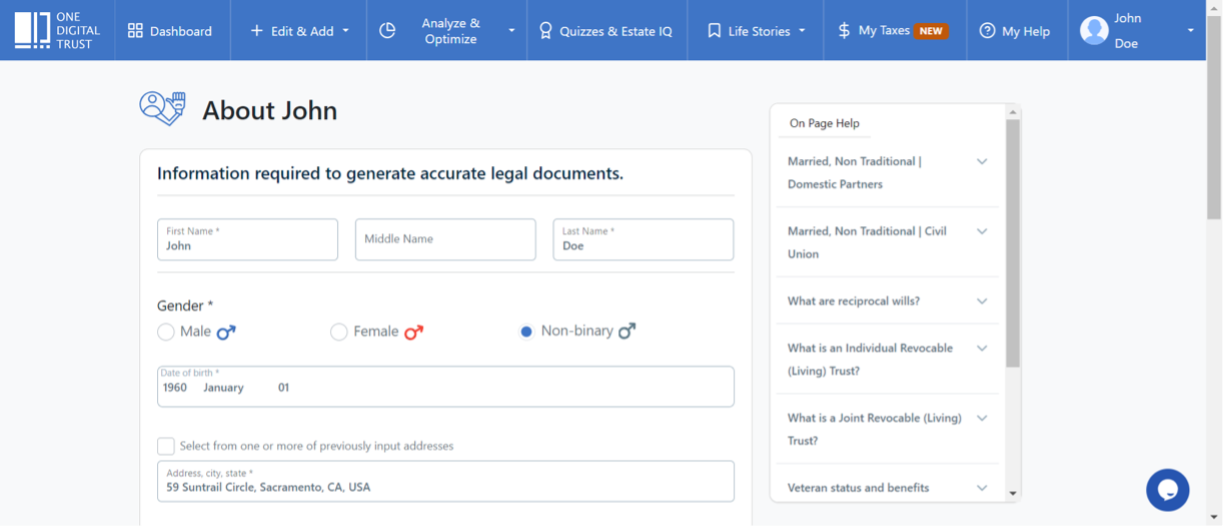
OneDigitalTrust allows LGBTQ+ users to:

  • Choose a marital status specific to their state, including registered domestic partners, civil union or legally married under state laws

  • The platform notifies users of elective share information that may apply per state-specific laws on minimum inheritance requirements including relevancy to same-sex couples

  • Accurately reflect gender pronouns for people in the system designated as “non-binary”

Comprehensive Support: Advisors can assist clients at any stage, from initial planning to finalizing documents, helping to ensure that all legal requirements are met.

White-Label Solutions: Financial institutions and advisors can customize the platform to reflect their branding, reinforcing their role as trusted advisors.

Securing Their Legacy While Growing Your Bottom Line

Careful estate planning, including airtight legal documentation, is crucial for all couples to ensure that rights are protected and wishes are honored.

Digital platforms like OneDigitalTrust not only simplify the process, including for same-sex couples’ challenges, but also enhance the client-advisor relationship by offering accessible, efficient, and comprehensive solutions.

Financial advisors who embrace these tools can better serve all their clients, helping them meet the desire to financially protect and support loved ones that is common to all of us regardless of sexual orientation, racial identification, religious affiliation, or any other demographic.

OneDigitalTrust’s technology achieves this while also giving your organization a double bottom line: you’re helping your clients secure the execution of their final wishes while generating a reliable flow of fee income for your organization.

170M Americans need an estate plan. OneDigitalTrust offers a white-label, turnkey estate planning platform with pricing options tailored to the needs of individual credit unions and financial advisors.

Contact us today to learn more!

Categories
Blog INSIGHTS

From Management Consultant to Entrepreneur, Sonny Kapoor Finds Opportunity in Estate Planning

CEO Sonny Kapoor and co-founder Rocky Mehta founded OneDigitalTrust, a pioneering digital estate planning platform, to spare families the stress and strain of dealing with the costly and time-consuming process of a loved one dying intestate, or without completing their estate planning.

Through their own experiences, they tapped into a little-known opportunity to address the needs of the mass affluent who are underserved in this area. Many believe it’s too costly to be worthwhile, and others don’t think they have enough of an estate to worry about.

Sonny sat down with Sarah Snell Cooke, co-founder of The Credit Union Connection, to share insights into his mission, vision and B2B model for OneDigitalTrust.

Sarah Snell Cooke: What’s the origin story of OneDigitalTrust?

Sonny Kapoor: I have worked as a management consultant for financial institutions for many years. During an engagement to overhaul the strategy for a credit union-owned RIA (Retirement Investment Advisor), we proposed digital estate planning as a new, innovative offering with the potential to deepen family and financial wellness for members.

The recommendation received much acceptance, but instead of building it themselves, the institution asked if I would build it so they could license it. And OneDigitalTrust was born.

The challenge of designing a platform that would be simple and affordable especially resonated with me because my father died intestate when I was 17 years old. I experienced first-hand the challenges my mother and I encountered in settling his estate, working through age-old estate planning laws.

SSC: Why are people not completing their estate planning? What’s the problem with that?

SK: Why such a remarkable proportion of the U.S. citizenry does not have a legally valid plan in place is a complex question. Up to this point, the easy answer was that the process was expensive and cumbersome.

This issue should be materially addressed with the advent of digital estate planning platforms like OneDigitalTrust. Yet, between 2023 and 2024, a 6% decline was recorded in Americans with an estate plan.

The more complex answer is buried in the deep psyche –estate planning makes individuals confront their mortality. Nobody welcomes the anxiety that accompanies such a task. Much of the avoidance is due to mortality salience – an awareness of the inevitability of one’s death creating anxiety, which triggers a powerful defense mechanism to side-step such thoughts (e.g., trivializing one’s likelihood of death or amplifying one’s ability to boost longevity, etc.). As a result, thoughts about our death are banned from persisting in our awareness and estate planning remains de-prioritized.

SSC: Who is OneDigitalTrust’s target audience? Why did you choose B2B?

SK: Our platform is intended for use by the mass affluent – all of those who do have some assets to pass down but suffer sticker shock at the lawyer’s fees or don’t even know where to start. Many don’t realize the thousands – or tens of thousands of dollars and more – that can be lost to a family legacy when someone dies intestate (without an estate plan).

Our platform streamlines the process, removing complexity through a custom-built, proprietary design, to offer affordable estate planning to many who never thought it would be within their means. We’ve lowered the barriers to entry to both price and users being overwhelmed by the complexity of it. OneDigitalTrust has built-in features to help users optimize their probate exposure so that more assets go into their beneficiaries’ pockets.

With so many – more than 65% – avoiding planning their estates, it’s crucial that we get our platform out to as many people as possible. This is why we decided to leverage a B2B, or business-to-business structure and sales model. By partnering with banks and credit unions, financial advisory firms, wealth management companies, insurance agencies and employee benefits companies, OneDigitalTrust can quickly touch many more families’ lives to save them from the head- and heartache my mother and I endured.

Digital estate planning is an ideal offering for institutions that desire to deepen the value of their own brand. Since estate planning goes to the very core of personal and family wellness, our B2B capability allows institutions to offer it as their service.  As a result, users credit the brand of their trusted provider with the peace of mind they feel when they complete their plan. This amplifies the brand loyalty for the institution like very few other offerings can.  Further, it is through our unique B2B partnering model that we can offer institutions a real option to generate a new non-interest income revenue stream to counterbalance the fee income that the Consumer Financial Protection Bureau and others are chiseling away.

SSC: How does OneDigitalTrust connect with companies to offer your platform?

SK: At one level, we have integration partnerships, such as Mastercard/Finicity, Zillow and others, that enrich the capability and functionality of our platform. We’ve also partnered with leading digital banking platform providers, like Jack Henry, Q2, Temenos and more, including proprietary integrations to embed OneDigitalTrust in their clients’ digital banking experiences. There’s no heavy lifting required for banks and credit unions; within days, they can reap the rewards of developing even more meaningful relationships with their customers and members.

SSC: What are the benefits to the institutions you partner with and serve (credit unions/banks/financial advisors/law firms/benefits providers/insurance companies)?

 SK: First, we are a B2B solution provider. Our objective is to focus on deepening our partners’ brand instead of promoting the OneDigitalTrust brand. Our powerful white-label capabilities deliver exceedingly well on that objective.

Second, unlike referral models, we offer our partners the ability to garner an exceedingly healthy margin while keeping the platform highly affordable for end-users. This helps our financial institution customers generate a durable new revenue stream to offset the loss of overdraft and debit interchange non-interest income that’s been slowly eroding.

Third, our customers can deliver an essential, highly desirable end-of-life planning capability to safeguard the legacy of their customers and members – quite literally, everyone needs an individual plan.

And finally, our partnering model extends beyond platform enablement. Our Partner Success team helps customers with ongoing support, from custom implementation playbooks to data analysis to sharing and cataloging best practices to webinars and training to various marketing support activities to measure and monitor utilization and performance.

Financial institutions are often seen as slow to adapt and less tech-savvy than fintechs. By partnering with an innovative platform like OneDigitalTrust, banks and credit unions can break free from that reputation and bring more attractive services to younger customers and members.

SSC: Any final comments or thoughts?

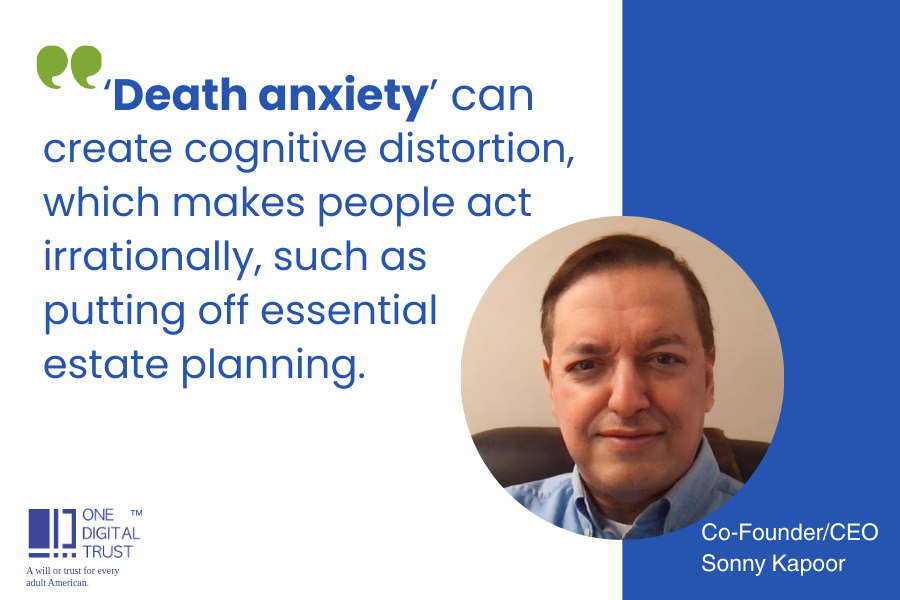
SK: Humans have an instinctive and ongoing existential fear of death. This ‘death anxiety’ can create cognitive distortion, which makes people act irrationally, such as putting off essential estate planning. The paradox is that having completed their estate plan, the same individuals reduce the intensity of such death anxiety and amplify personal and family well-being enormously. We believe financial institutions are best suited to deliver estate planning to their customers so they can deepen their brand among the communities they serve.

Categories
Blog INSIGHTS

3 Rs to Prevent Elderly Financial Abuse: Red Flags, Relationships and Respect

Consider financial education comprehensively for National Financial Literacy Month

Recent lawsuits point to both the vulnerability of many older Americans to the scourge of online financial fraud and the opportunity that engaged financial services providers have to help thwart such pernicious crime.

Two such complaints are against a top 5 bank, which is accused of allowing two elderly women in California to lose more than $2 million to so-called “pig butchering scams.” Here, fraudsters posed as IRS agents to win the victims’ trust and trick them into multiple fraudulent transactions facilitated by the bank.

In another case, a top bank and credit union are accused of making 75 international transfers—74 of them alone through the credit union—by a retired naval officer totaling about $3.6 million. Unfortunately, many transfers were made even after concerns were explicitly reported to adult protective services in the officer’s home county.

The AARP says an estimated $28.3 billion is lost to what it calls elderly financial exploitation (EFE) each year in this country. Some 72% is lost to people the victims know, such as friends and family.

The emotional toll includes embarrassment and anguish and so much more, including, as in the California cases mentioned above, a person losing not only her life’s savings but also her home. Financial services providers are on the frontline in detecting and preventing this criminality, which targets the growing elderly population.

April is National Financial Literacy Month, and it can’t stop at teaching young children to save and spend their allowances wisely. We must consider financial education more holistically. So, what can a responsible, proactive bank, credit union, financial advisor, wealth manager or other financial services provider do?

Red Flags

First, make sure protocols to safeguard elderly clients are standard operating procedure. That begins with training staff to recognize red flags. Those can include unusual withdrawals or Not Sufficient Fund occurrences, newly added co-owners on accounts, or sudden investment decisions inconsistent with a client’s known objectives.

Indicators of the latter can include senior clients receiving excessive phone calls or visitors pushing dubious financial arrangements. Another indicator is a sudden change in beneficiaries and other terms in the consumer’s estate planning.

Relationship Building

Uncovering such situations requires an engaged relationship with the potential victims, combining a personal and digital touch. Financial services providers should initiate internal reviews and documentation when suspicion arises from unusual account activity. A best practice is assigning a dedicated team to investigate thoroughly. Potential steps include discussing concerns with the client privately, reviewing the legitimacy of transactions, and scrutinizing relationships with any new parties acting on the client’s behalf.

Again, that requires a trusted relationship with the member or customer and the determination to act. If your internal investigation uncovers likely malicious activity, cutting off access to the accounts and reporting your concerns to the appropriate authorities is imperative. State adult services, law enforcement and the Consumer Financial Protection Bureau all have protocols for EFE cases. Become part of the solution.

Respecting Privacy While Protecting Everyone

We stress again that it takes an engaged relationship with the older adult and their family to be in a position to discover elderly financial exploitation. And, the digital capabilities of OneDigitalTrust’s platform are designed to undertake the heavy lifting for financial advisors to be aware of certain estate planning-related actions or events that imply potential financial elder abuse, like taking advantage of probable incapacitation or undue influence.

OneDigitalTrust empowers financial services clients to safely digitize and share estate documents, impact analysis, account information, and powers of attorney with a pre-approved network of family members and trusted advisors, such as financial planners.

We need to add that while vigilance is essential, you must balance privacy and client preferences against protecting them and your own institution’s interests and liability.

Indeed, there can be a fine line between doing too little and doing too much, between inaction and overstepping institutional authority. Digital services facilitate transparency and shared access to respect that shifting, evolving line and comfort zone for you and your clients.

Indeed, OneDigitalTrust can be a critical component of the seamless collaboration between clients, family members, financial advisors and other legal and medical professionals, which results in the best decisions regarding elderly welfare and assets.

This heightened visibility also reduces exploitation opportunities while honoring client desires for privacy and autonomy. The OneDigitalTrust platform brings elderly individuals’ entire advisory team into a secure, unified digital space where abnormalities or suspicious activities become readily apparent.

Elderly financial exploitation will always be with us, but proactive identification and coordinated interventions can curb its effect on your clients and your institution. Staff training, documented and followed escalation procedures, aggressive reporting of suspected crimes, and selective account freezes can disrupt fraudsters and protect your most valuable assets: the people who entrust you with their money, dignity and financial independence. Make relationship building, recognizing red flags and reporting elderly financial exploitation part of your National Financial Literacy Month celebrations in April.

170M Americans need an estate plan. OneDigitalTrust offers a white-label, turnkey estate planning platform with pricing options tailored to the needs of individual credit unions and financial advisors.

Contact us today to learn more!

Categories
Blog INSIGHTS

Break the Habit: Digital Estate Planning as an Essential Tool and Differentiator

The time and complexities involved in providing estate planning have long made it an outlier as a service. Investment advisors and wealth managers at traditional credit unions, banks, insurers and other financial services providers have been relegated to the sidelines as they refer their clients, customers and members to attorneys, as is the typical practice.

That practice, however, is changing as financial services continue to rapidly evolve in the digital world. Your organization will no longer have to pass your consumers—as well as the income they can generate—on to lawyers, keeping you from deepening those relationships.

Virtual estate planning platforms have been hard at work, developing their digital muscles, eradicating the need for attorneys, and even in-person servicing if an individual chooses. Empower your firm to break the habit of making third-party referrals and to deepen the personal touch and value they build with their clients, helping those they serve to navigate their financial lives and plan their legacies more holistically.

A Hybrid Advisor-Client Experience

“A streamlined digital estate planning platform delivered as a hybrid advisor-client experience provides a unique opportunity for advisors to expand their service model, amplify relationship alpha, power retention, and create advisory pathways to the next generation of clients,” a new report from Javelin Advisory Services reads.

Titled “Digital Estate Planning: A New Frontier for RIAs,” the think tank’s report focuses on the power of digitizing the creation and storage of relatively simple but vitally important documents such as wills, revocable trusts, and medical directives. It cites OneDigitalTrust as a leader in creating that new nexus of advancing fintech innovation and growing advisor value, as shown in the illustration below.

Javelin Research found OneDigitalTrust to provide advisors innovation and value.

The Relationship Alpha for The Next Aging Generation

Millennials have surpassed baby boomers as the largest generation in the United States. Those 20-somethings to 40-somethings are digital natives. They’re accustomed to living online – including working, shopping, learning, and banking – but they’re still real, live human beings, naturally, who can benefit from professional guidance and advice through their journeys.

Along with traditional matters such as raising families, forging and maintaining careers, caring for aging relatives, and the vicissitudes of aging, they also find themselves with their own unique set of stressors, as the Javelin report astutely illustrates in this figure below.

Platforms like OneDigitalTrust help to calm financial services providers clients' anxiety, Javelin found.

The “Demographics” section in the above figure includes “increased personal wealth,” among other factors that present an opportunity to RIAs and other financial services providers who can most seamlessly and effectively combine high-tech and high touch for this cohort of adult Americans.

As the report observes, all these factors imply that scaled delivery of personalized solutions points to demand for an enhanced user experience. Digital estate planning combined with direct conversations with clients about this particularly weighty topic helps cement that relationship with the client and potentially with the other stakeholders in the next generation, especially if they, too, join the discussions.

Ultimately, it’s about the effectiveness of advisor-client communication, a significant currency that makes financial advisors more than order-takers in a digital world of cookie-cutter, low- or no-cost options. That’s not a recipe for long-term success.

“The legacy [estate-planning] conversation is emotional, often covering philanthropic and generational aspirations,” the Javelin report observes. It points to this empowering feature in our platform: “OneDigitalTrust, for example, creates a client area where notes can be appended to the system, allowing the client to memorialize and express those aspirations and sentiments for advisors, kids and other beneficiaries.”

Differentiation and Commoditization

That vital communication feature – among others – helps OneDigitalTrust continue to push out the leading edge of humanizing digital estate planning and, most critically, the ability for advisors to differentiate themselves in the uber-competitive fintech world.

OneDigitalTrust, as the Javelin report observes, is also out front with integrating personal financial data into its platforms. That gives financial services providers the ability to wade through multi-party, multi-platform morass to add even more value.

Financial services providers are keenly aware of the commoditization of their products and services and the need to differentiate. A robust foundation for that is personal service that uses digital products to help leverage meaningful conversations around the unique access financial planners have to their clients’ assets.

That conversation should include how to distribute those assets when the time comes without sending that part of the business elsewhere. “Advisors must consider expanding their business model by leveraging digital estate planning solutions,” the Javelin report concludes. “New channels of dialogue are opened with beneficiaries and family members who can become clients and advocate for the advisor’s expertise.”

And that helps the advisor and their employer build their value and legacy.

170M Americans need an estate plan. OneDigitalTrust offers a white-label, turnkey estate planning platform with pricing options tailored to the needs of individual credit unions and financial advisors.

Contact us today to learn more!

Categories
Blog INSIGHTS

Digital Estate Planning Empowers Your Customers to Avoid These 3 Mistakes

Estate planning is a task easily set aside amid the demands of daily life. But life will indeed end, and your customers should have a proper estate plan in place. Even when their assets are modest and require a simple will, it is crucial for every working adult who would like to ensure what happens to their family and their assets after they’re gone.

Only about one-third of all Americans have created a formal estate plan. For the two-thirds who do not have one, that’s a serious problem for them and their families. It is also an opportunity for financial services providers, like wealth managers, financial advisors, credit unions and banks to step up with solutions that combine digital ease and personal touch to make estate planning accessible and affordable for everyone.

Your trusted relationship as a financial services provider gives you the perfect segue to help your customers and members avoid some estate planning mistakes that can cause their loved ones stress, conflict, expenses and other headaches down the road.

Here are three mistakes you can help your customers/members avoid:

1. Not Having an Estate Plan 

The biggest mistake – and most common – is doing nothing. About two-thirds of Americans do not have an estate plan, such as a will or trust. Without a legally valid estate plan, state intestacy laws require assets to be distributed by a probate court.

That costs time and money and heightens already frayed feelings. Family members and others with claims can tie things up over what others might consider surprisingly small amounts. Help your members and customers avoid that situation.

Also, not having a will can leave the court to decide about guardianship for minor children. A will or trust will establish the parents’ desires for who should continue caring for their children should they pass while the children are still minors.

2. Not Keeping Your Estate Plan Up-To-Date

Things happen. Customer and members’ life changes like marriage, divorce, new children and stepchildren, and changes in income and assets can change how a person wants their estate handled.

But wills are easy to set and forget, never revisited until it’s time for their execution. To ensure the plans are current, estate documents should be reviewed every couple of years or so and after significant life events.

A plan based on outdated wishes can lead to disputes between family members down the line. Offering estate planning documents that are easy to update will help keep your customers and members’ plans current and smooth out what could be a bumpy process.

3. Not Communicating the Estate Plan

Conversations about estates are always challenging, but they are ones we must encourage as responsible financial services providers. They are fraught with potential hard feelings about who gets what, of course, not to mention the difficulty of recognizing the eventual loss of a parent while both parent and child are very much alive. Not fun.

However, these conversations are essential for holistic financial wellness. Loved ones need to know what to do when that time comes. They should have access to critical documents and open conversations to avoid any confusion. That includes ensuring the documents remain up to date.

How Digital Estate Planning Can Create Winning Outcomes

As a trusted financial services provider, you can offer your customers and members digital estate planning solutions like OneDigitalTrust. We’ve built a robust platform that allows end users to create wills, trusts, power of attorney, healthcare directives and much more. Users truly appreciate the document tracking capabilities and digital vault for organizing the process and storing the documents.

Meanwhile, you are provided access to real-time, smart analytics to deepen relationships with customers and generate a new source of non-interest income. And because our platform is white labeled, you can offer it under your brand, and users know your organization is there to care for them and their families.

Many estate planning mistakes occur due to a lack of education and proper guidance, fear of acknowledging our human mortality, and consumers’ expectations of the cost of estate planning. OneDigitalTrust removes the lawyer from the equation, making creating legally valid estate planning documents much more affordable. We help you make it easy for the mass affluent to access compliant, responsible, plain-language estate planning. Integrating a trusted solution like OneDigitalTrust can help those who trust you achieve and maintain peace of mind around what can be such a sensitive and complicated subject, one all too easy to ignore otherwise.

170M Americans need an estate plan. OneDigitalTrust offers a white-label, turnkey estate planning platform with pricing options tailored to the needs of individual banks, credit unions, financial advisors, wealth managers, insurance companies, HR benefits providers and more.

Contact us today to learn more!